SERVICES

Executive Function Assessment

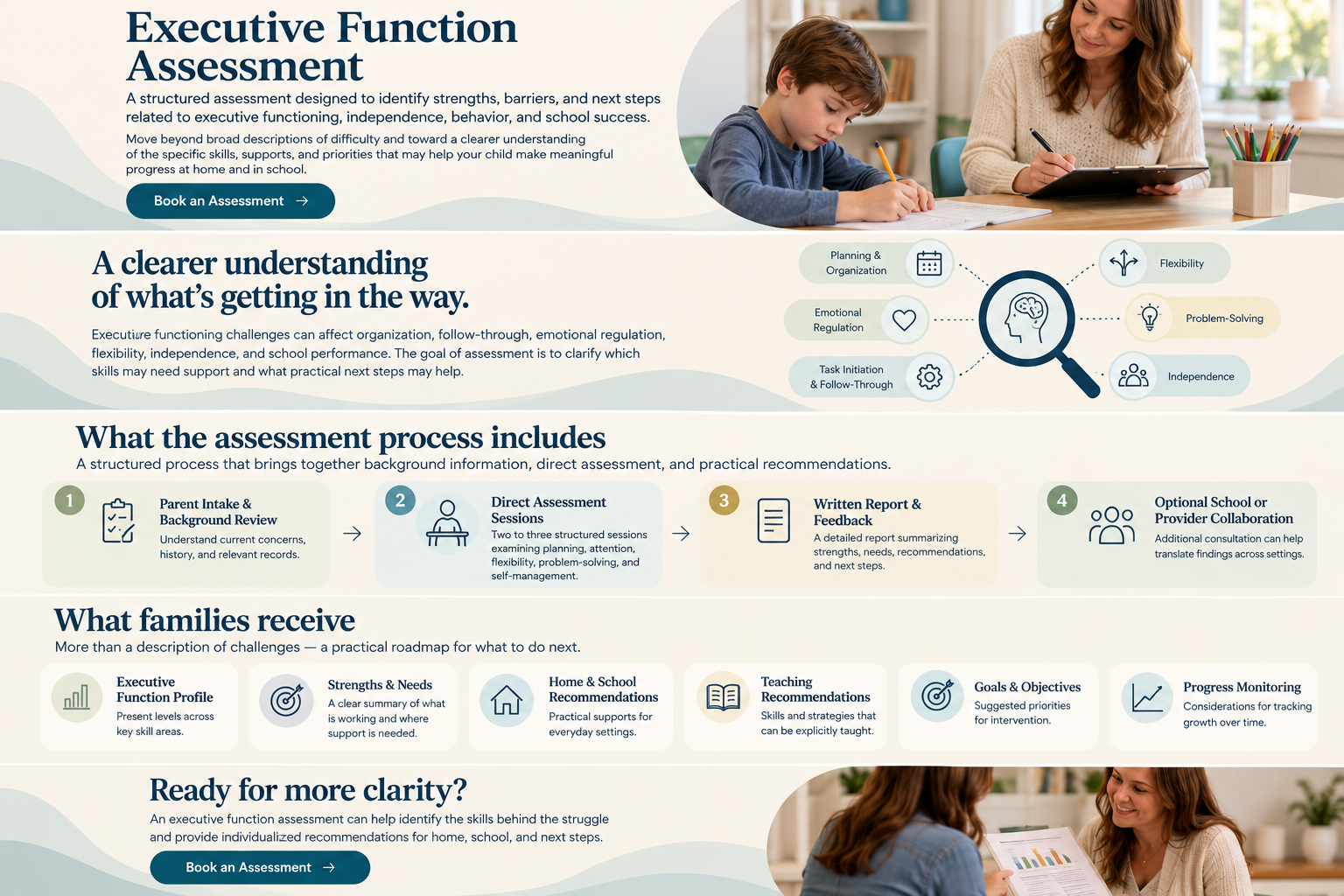
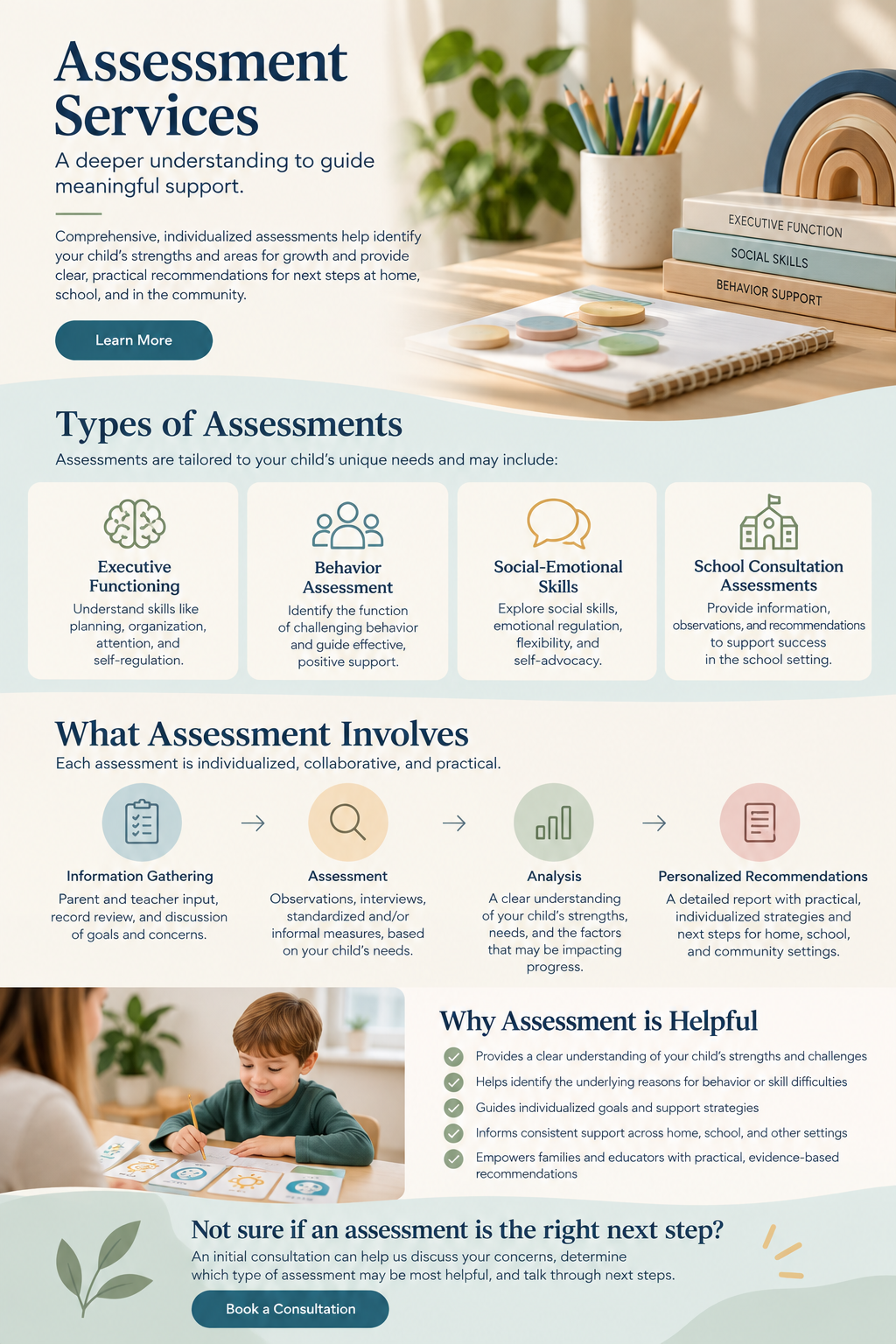
A structured assessment designed to identify strengths, barriers, and next steps related to executive functioning, independence, behavior, and school success.

This assessment is designed to help families move beyond broad descriptions of difficulty and toward a clearer understanding of the specific skills, supports, and priorities that may help a child make meaningful progress at home and in school.

A woman and a boy sitting at a round table playing a card game. The woman is writing on a clipboard, and the boy is smiling. The table has board game pieces and colored pencils, and there is a white shelf with books and toys in the background.

A Clearer Understanding of What’s Getting in the Way — and What to Do Next

Executive functioning challenges can affect many parts of daily life, including organization, follow-through, emotional regulation, flexibility, independence, and school performance. Often, parents and educators know that a child is struggling, but still feel unsure about exactly what skills are missing, why those challenges are happening, or what kind of support would be most helpful.

This assessment is designed to provide a more detailed understanding of a child’s executive functioning profile by identifying meaningful strengths, specific areas of need, and practical next steps for support. The goal is not simply to confirm that a child is having difficulty, but to clarify what skills may need to be taught, what supports may be helpful, and how to move forward in a way that is individualized, realistic, and actionable.

What the Assessment Process Includes

1. Parent Intake and Background Review

The process begins with an initial meeting to gather background information, better understand current concerns, and learn more about the child’s developmental, educational, and behavioral history. Relevant records and other available information are also reviewed as part of the assessment process.

2. Direct Assessment Sessions

The assessment typically includes two to three direct sessions with the child. These sessions are designed to evaluate executive functioning skills through structured tasks and observation of how the child approaches planning, attention, flexibility, problem solving, and self-management.

3. Written Report and Feedback Meeting

Following the assessment, families receive a detailed written report summarizing findings, strengths, areas of need, and recommendations. A follow-up meeting is then held to review the results, answer questions, and discuss next steps.

4. Optional Collaboration with School or Other Providers

When appropriate, an additional meeting with a school team or outside provider can be arranged to support collaboration across settings and help translate assessment findings into practical next steps.

What Families Receive

The goal of the assessment is not just to describe challenges, but to provide a clearer understanding of what may be getting in the way and what to do next. Written reports are designed to be practical, individualized, and useful across home and school settings.

Families receive a detailed written report that may include:

  • A summary of the purpose of the assessment

  • A description of the assessment process and interpretation of results

  • Present levels of functioning across executive functioning domains

  • An overall summary of strengths and areas of need

  • Practical recommendations and supports for home and school

  • Teaching and instructional recommendations

  • Suggested goals and objectives

  • Considerations for progress monitoring and ongoing intervention planning

The assessment process is designed to gather information from multiple sources and translate it into practical, individualized recommendations.