UNDERSTANDING EXECUTIVE FUNCTION SKILLS
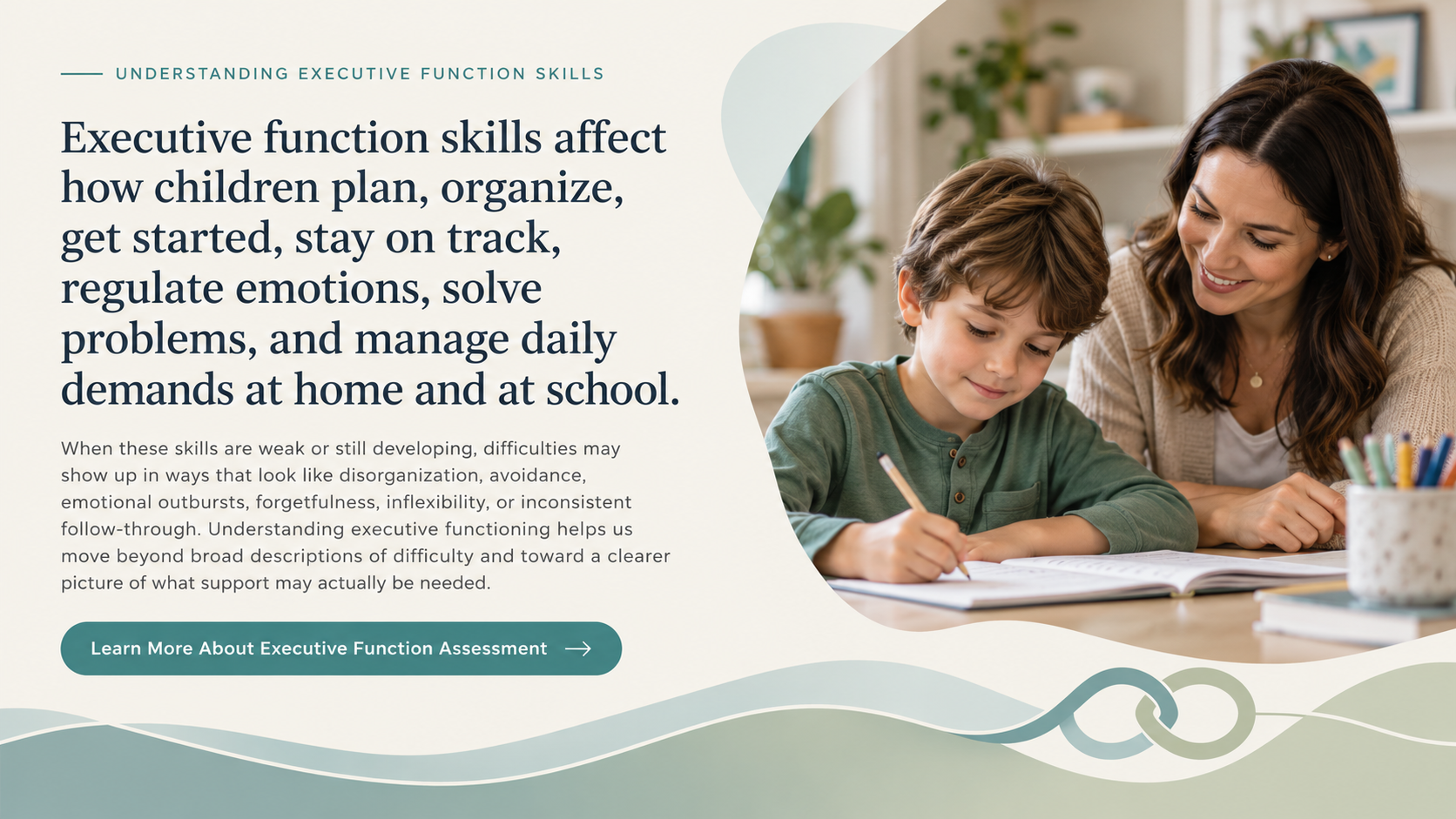
Executive function skills affect how children plan, organize, get started, stay on track, regulate emotions, solve problems, and manage daily demands at home and at school.
When these skills are weak or still developing, difficulties may show up in ways that look like disorganization, avoidance, emotional outbursts, forgetfulness, inflexibility, or inconsistent follow-through. Understanding executive functioning helps us move beyond broad descriptions of difficulty and toward a clearer picture of what support may actually be needed.
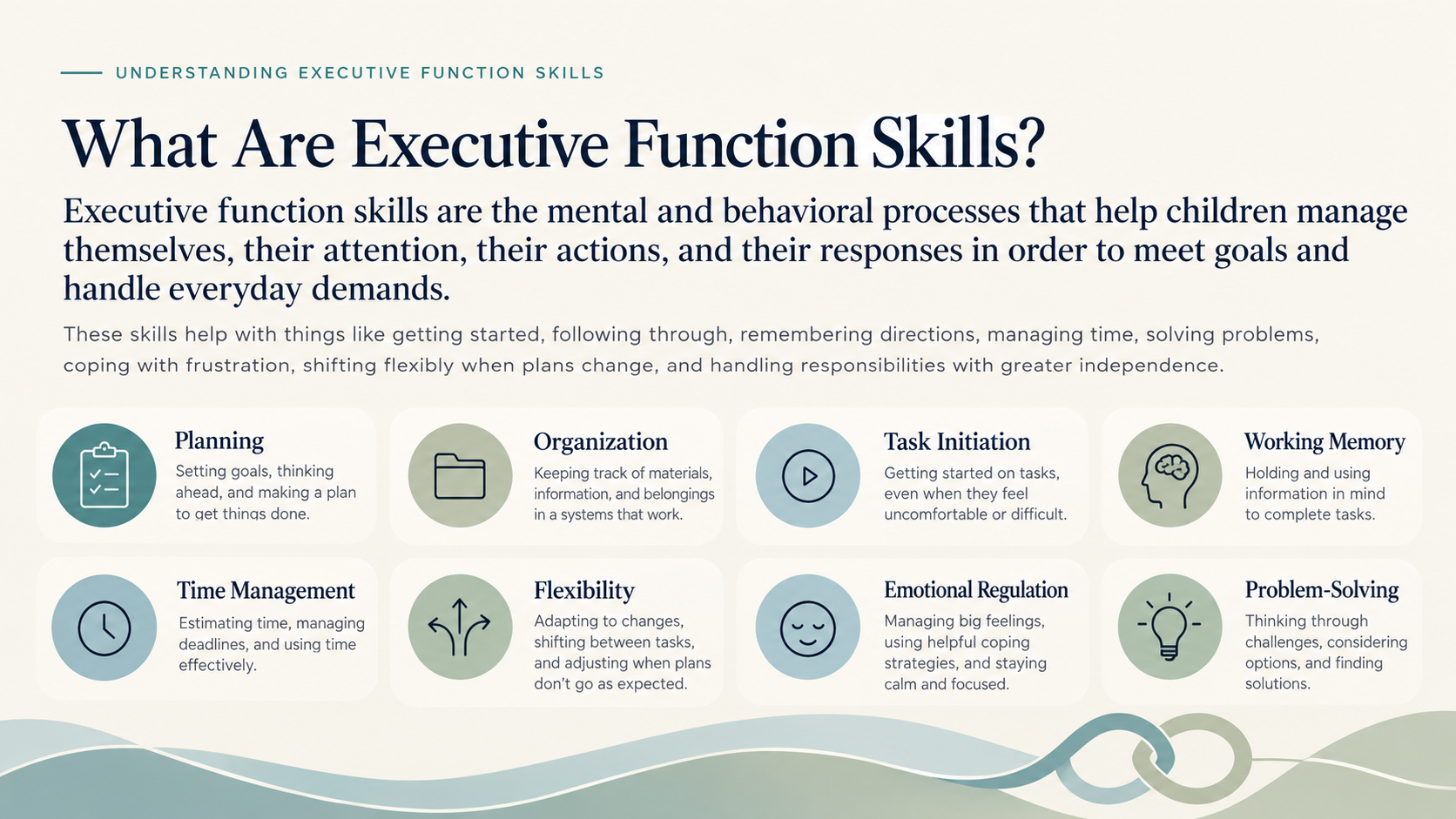
What Are Executive Function Skills?
Executive function skills are the mental and behavioral processes that help children manage themselves, their attention, their actions, and their responses in order to meet goals and handle everyday demands.
These skills help with things like getting started, following through, remembering directions, managing time, solving problems, coping with frustration, shifting flexibly when plans change, and handling responsibilities with greater independence.
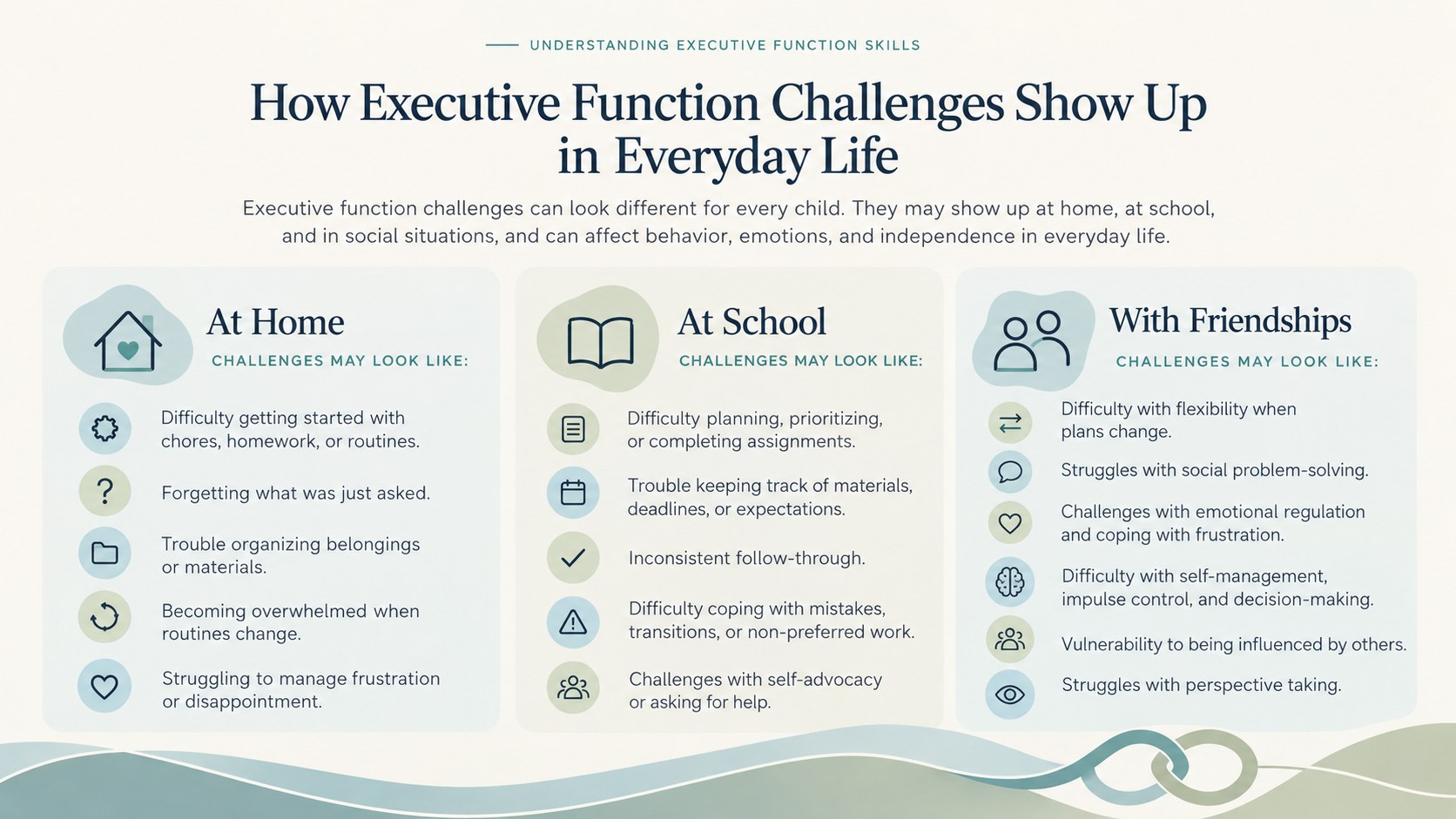
How Executive Function Challenges Show Up in Everyday Life
At Home
Difficulty getting started with chores, homework, or routines
Forgetting what was just asked or losing track of directions
Trouble organizing belongings or materials
Becoming overwhelmed when routines change
Struggling to manage frustration, waiting, or recovering from disappointment
At School
Difficulty planning, prioritizing, or completing assignments
Trouble keeping track of materials, deadlines, or expectations
Inconsistent follow-through despite understanding the task
Difficultly coping with mistakes, transitions, or non-preferred work
Challenges with self-advocacy or asking for help (i.e., asking for help too much or not enough)
With Friendships
Difficulty with flexibility when plans change
Struggles with problem-solving in social situations
Challenges with emotional regulation and coping with frustration
Trouble building independence with routines and being
Difficulty with self-management, impulse control, and decision-making
Vulnerability to being influenced by others
Struggles with perspective taking
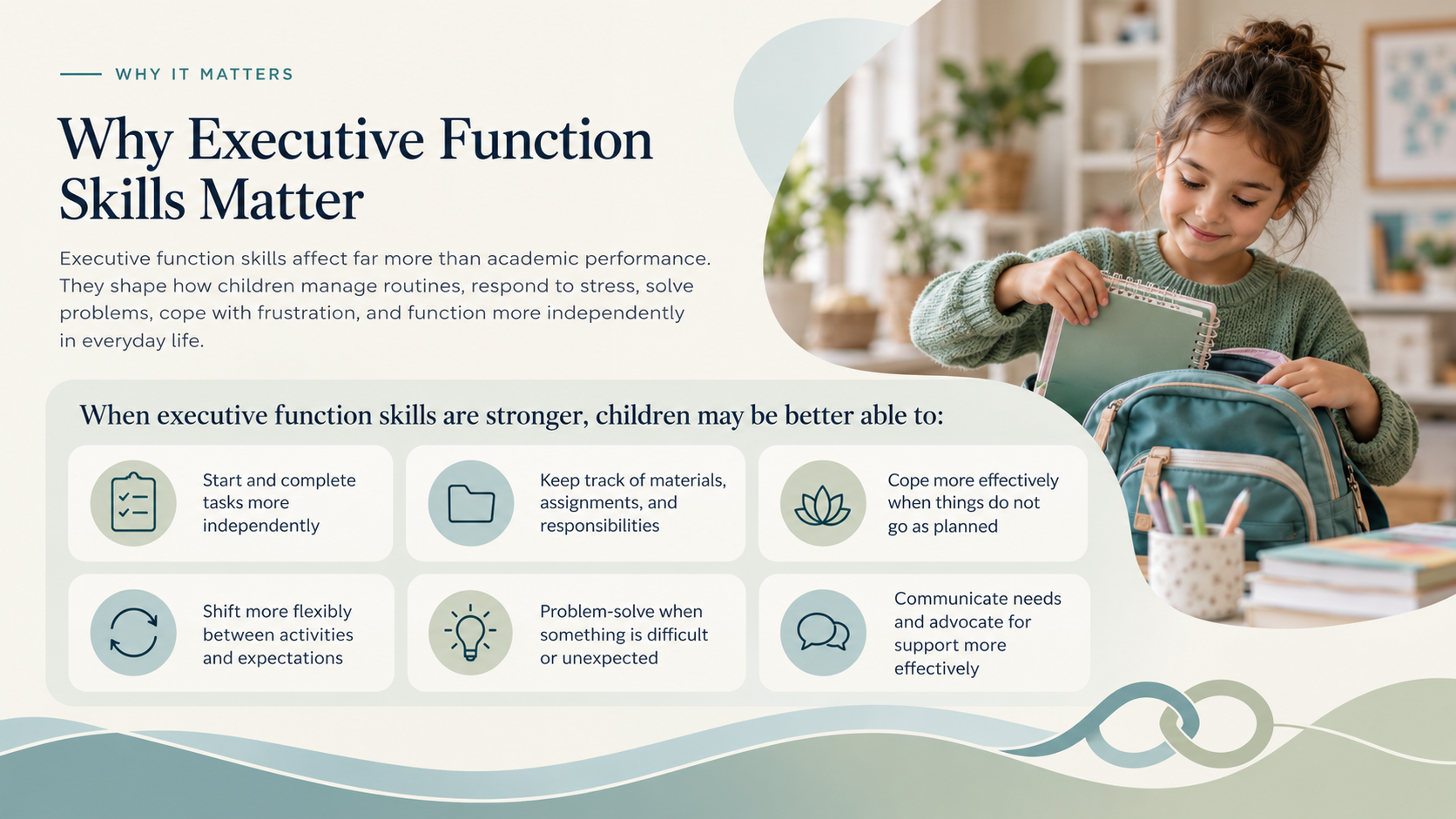
Why Executive Function Skills Matter
Executive function skill affect far more than academic performance. They shape how children manage routines, respond to stress, solve problems, cope with frustration, and function more independently in everyday life.
When executive function skills are stronger, children may be better able to:
Start and complete tasks more independently
Keep track of materials, assignments, and responsibilities
Cope more effectively when things do not go as planned
Shift more flexibly between activities and expectations
Problem-solve when something is difficult or unexpected
Communicate needs and advocate for support more effectively
Why Assessment Matters Before Deciding What to Work On…
Executive functioning difficulties are often described in broad terms - disorganized, forgetful, impulsive, rigid, unmotivated, or overwhelmed. But those descriptions do not tell us enough about which specific skills are weak, what situations are most difficult, or what kinds of support are actually needed.